




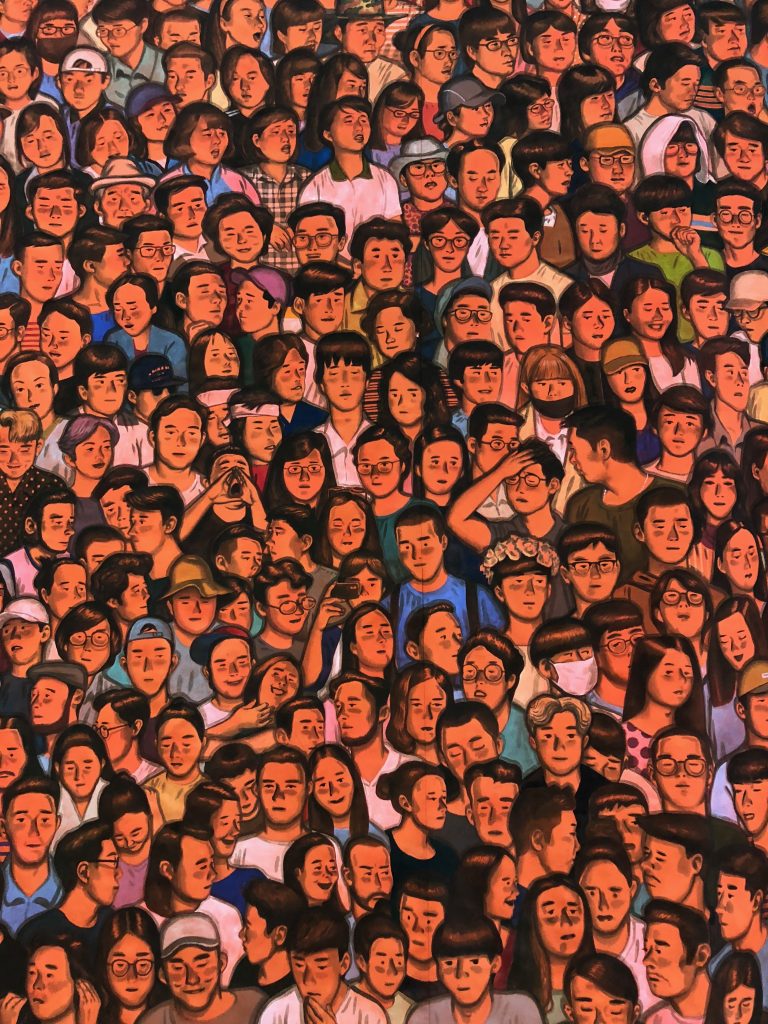
This newsletter is being written on a bus, speeding through the night from Busan to Gwangju. It may not sound glamorous but the Korean bus network is super efficient and ridiculously inexpensive. Note to self: next time in Korea, give the trains a miss and take only buses. I’m here to see three Biennales, and meet as many artists and curators as I can cram into a short visit. After two days, my record is one good and very organised artist, and one upbeat curator, at the new Busan Museum of Contemporary Art.
Busan MoCA is only six months old. It’s kind of bare looking, and even smells new. The building is spacious, if architecturally undistinguished. This is probably an advance on Colin Fournier and Peter Cook’s adventurous Kunsthaus in Graz, which I wrote about recently. At least Busan offers an opportunity to hang works on walls and carve up spaces to best advantage. I wonder why museums can’t be both architectural drawcards and practical exhibition spaces? It’s amazing how rarely these two qualities coincide. Even Frank Gehry’s Guggenheim in Bilbao has a tendency to reduce artworks to insignificance.
Busan MoCA’s chief claim to fame is a lavish covering of greenery, which conceals the boxiness of the façade. The Biennale, titled Divided We Stand, turned out to be better than expected, with a few memorable works. It was tame stuff though in comparison to the last Biennale in saw in Busan, which began with Swiss yodelling and two girls in mini-skirts flailing electric violins. Now that was classy!
This week’s art column remains in Sydney, paying a rare visit to the Art Gallery of NSW, for William Kentridge: Things I Don’t Remember. This is an intresting example of how to turn a minor show into a major one, with an injection of private funds – from the Naomi Milgrom Foundation, which also supplied the lion’s share of the exhibits. Kentridge turned up, fresh from a performance of the Magic Flutein Tokyo, and made himself available for a whole day’s worth of functions at the AGNSW, and the following night at Annandale Galleries. I’ve written a catalogue essay for the Annandale show, which I’ll try and post soon. (I’ve actually got a backlog of catalogue essays, which need to go up on the blog section of the website when I can find a moment).
The only other big-name artist I can remember being so generous with their time is David Hockney, who finds all public events to be torture because of his deafness. Nevertheless, when asked, he always puts in the hours.
I’d hoped to review Damien Chazelle’s First Manthis week, but the vagueries of my timetable meant I couldn’t catch the preview before I left Sydney. Instead I’ve settled for some Oz content, with Stephen McCallum’s debut feature, 1%. It’s a film about bikies – a strangely compelling cinematic sub-genre, even for those of us with no desire to ever get on a motorbike. It’s not a masterpiece, but it’s not bad either – which in the context of recent Australian cinema, is a significant achievement. It would be nice to imagine that local cinema is on the up-curve again.
As one last blast, I can’t get over the NSW government’s decision to order Louise Herron, the CEO of the Sydney Opera House, to allow an advertisement for a horse race to be projected all over the building’s famous sails. Herron rightly objected, and was greeted with a stream of invective from loathsome shock jock, Alan Jones. This was apparently enough to get the Premier behind the idea, along with the urging of the equally repugnant Stuart Ayres, the Minister for Sport – although it seems that Sport Business, or Gambling, might be a more appropriate title.
Since then, the scheme has been approved by PM, Scott Morrison; NSW leader of the Opposition, Luke Foley; and Anthony Albanese – everybody’s idea of a Labor leader in waiting. The most prominent pollie who has come out against it is none other than the real Labor leader, Bill Shorten. This puts me in the uncomfortable position of actually having to like something that has come out of Bill Shorten’s mouth. It’s lucky I’m in Gwangju, where I can quietly come to terms with this calamity.