




This week I was forced to reflect on a great banal truth of human nature: we rarely have strong feelings about a subject that doesn’t impact directly on our own lives. This is one of the reasons it’s been so difficult to sell the message about climate change which remains an entirely abstract proposition to most people – or at least until they lose everything in a bushfire or a flood.
It’s also the most basic reason people don’t care much about unemployent when they’re gainfully employed; about education when they don’t have a student debt; about house prices when they’re settled and the mortgage is paid off; about wars in foreign countries, which are only seen on TV, and so on. It’s this basic self-centredness that allows sinister hypocrites such as Scummo to let health, education and environmental problems fester while we are reassured, time and again, that everything is just beaut!
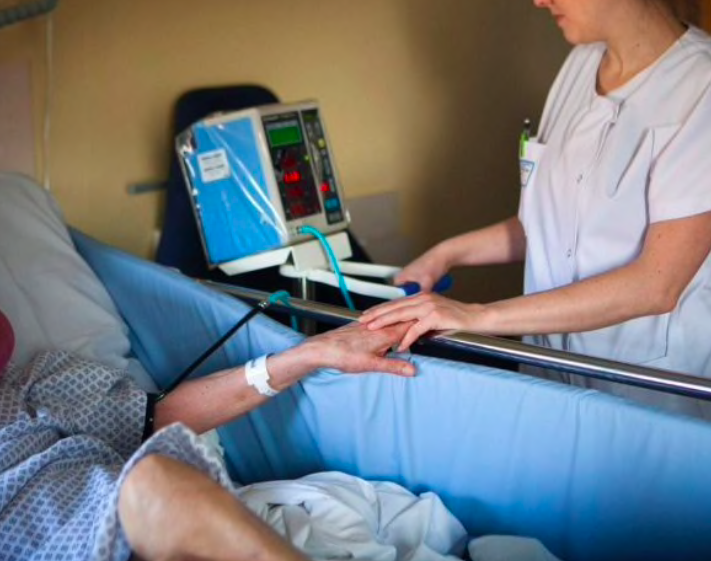
I realised I’ve never thought much about the state of health care in this country and in NSW, although I had a vague idea it was going down the drain. This week, however, I find myself stranded in the Hunter Valley attending to a family medical emergency while Sydney goes into another COVID lockdown. What have I seen at close quarters? Unbelievable negligence and complacency among GPs in my home town; a conscientious doctor who was shocked at what he saw and has taken personal charge of the case; public hospitals in which some staff seem good-hearted and committed, but far too many are ignorant, careless and downright rude; inedible hospital food that was cooked three months ago by the cheapest tenderer, and reheated for patients.
I could go on, but it’s horribly depressing. I don’t believe that most GPs and hospital staff are bad people, rather they are testimony to what happens when the health care system is starved of resources and forced into cost-cutting measures. Morale plunges, quality of service diminishes, mistakes are multiplied, patients are viewed as “types”, with some judged more expendable than others. For patients without cars, transport from home to some distant hospital is an utter nightmare, reliant on elderly voluteers who can’t work long hours.
That, in a nutshell, is why the newsletter is so late this week. I’ve been on hospital duty in the bush.
It’s an irony of sorts that the movie being reviewed this time around is The Mole Agent, an unorthodox Chilean documentary about an 83-year-old man who is sent into an old people’s home to investigate the quality of care being doled out to one of the inmates. It’s a bizarre, funny and ultimately touching film that lays bare the facts of old age to those of us who might prefer not to think of such things.
The art column is my latest, and hopefully final excursion into Archibald Prize season, in the form of a review of the AGNSW’s historical exhibition, Archie 100. As ever, there are good points and bad points to the gallery’s enterprise, but I still believe that bad sight of the week is the ABC’s 3-part documentary on the Archibald. As someone who has grown up with the ABC, and has had many friends and acquaintances within the ranks, I don’t recognise the awful, trendy, superficial dross that now passes for arts coverage. Let’s hope current affairs never goes down that path… or has it gone there already? Annabel Crabb was once a political journalist before she began cooking cakes and dressing up like a character in a pantomime. Rachel Maddow from MSNBC writes a gripping investigative book about the oil industry, Leigh Sales fom 7.30, writes a book about herself…
I better stop there and stick to my own turf. The only point I would emphasise is that no matter what the subject – health care, politics or the visual arts, it needs to be approached about with a degree of care, expertise and scepticism that does justice to the reader or viewer’s intelligence. Stupidity is a permanent pandemic that doesn’t require taxpayer-funded superspreaders.