




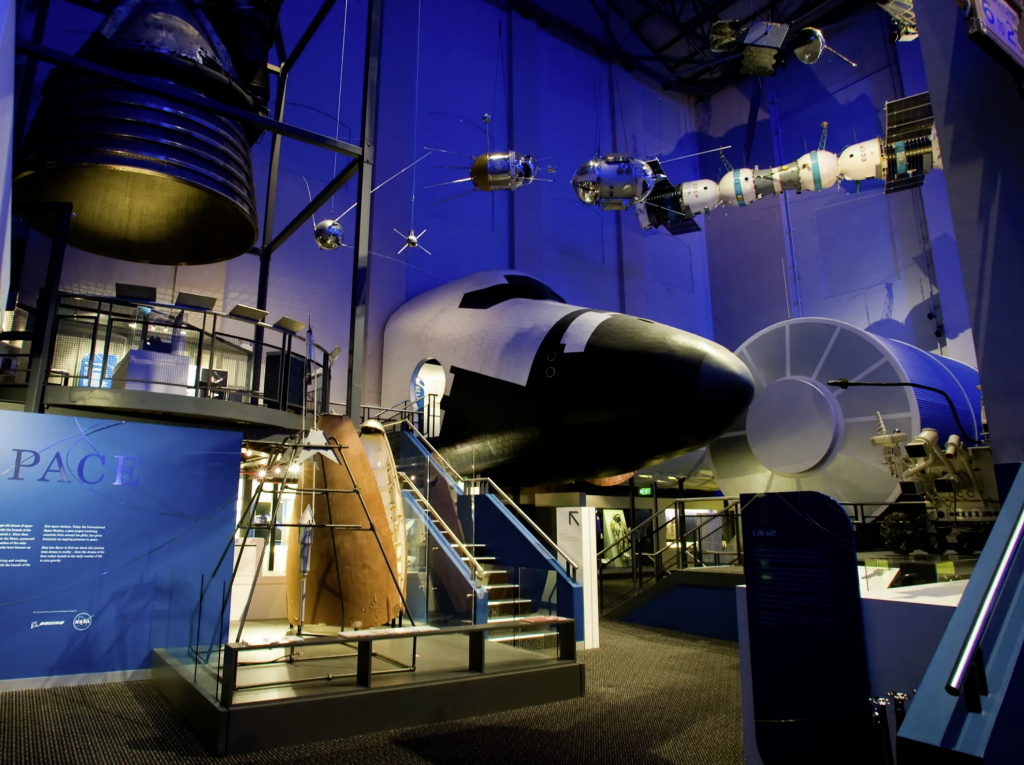
This week, I found myself wishing that the media, which has made such loud and relentless noises about Albo’s “broken promise” in not going through with the Morrison government’s “Stage 3 tax cuts” (it sounds just like cancer), would show the same outrage about NSW Labor’s broken promise to save the Powerhouse Museum.
It says a lot about this country when there is such confected indignation about changes to a tax regime that means benefits will go to lower income earners rather than the wealthy. Why would most Australians be upset about this change of tack when they will personally be better off? The argument seems to be that it discourages people to be “aspirationals”, aspiring to that glorious day when they join the ranks of the rich and pay less tax!
How soon we forget Tony Abbott’s long list of broken election promises, listed in a Herald article of 2014, in relation to the ABC, Education, Health, Foreign Aid, Indigenous Affairs, Environment… AND Taxes. I don’t remember the Boiled Egg getting excited about this laundry list of lies.
In reality it seems the original “Stage 3” arrangements would have only reinforced inequality, making it easier for the rich to get richer, and harder for the poor to rise off the floor. Business as usual. Am I being too simplistic?
While all this huffing and puffing is going on, there is a chilling silence about NSW Labor’s blatant betrayal of an election promise vis-à-vis the PHM. And it’s not just the betrayal and the lies, it’s the almost unbelievable spectacle of a government lavishly rewarding a failing cultural institution while expecting the responsible ones to tighten their belts! The result of this perverse process, which Lewis Carroll could not have scripted, will be not one, but three white elephants that have no hope of attracting audiences, and will remain a monumental drain on the public purse.
I’m not simply being alarmist to win an argument. The supporters of the Powerhouse have analysed five years’ worth of data and come up with the most devastating statistics.
Over the past five years, under Lisa Havilah’s “dynamic” leadership, PHM visitation has decreased by 33%, while the numbers have risen in every comparable institution. Over the same period, the recurrent grant from the NSW government has increased by 92%.
What sort of favouritism rewards a museum for wilful failure? Ms. Havilah has already explained her visionary approach in public forums, such as the Adelaide speech that was blocked from public access after it was mentioned in this newsletter. When I asked the Hawke Centre about this, they said they did not have permission from the speaker to make a recording. As Havilah would have known she was being filmed, one can translate this to mean: the speaker personally withdrew permission to show the video.
In this talk, she brazenly said: “I didn’t ask the audience what they want. I ignored the data.” Her approved strategy was “never trying to explain or educate”.
It should be noted that a large part of Havilah’s Adelaide speech was spent boasting of her great success in her previous job as director of Carriageworks. But when she departed, the incoming director found the place was broke and needed an urgent lifeline. Before appointing such a person to a job for which she had no qualifications or empathy, the previous government might have done well to ignore the spin and look at the accounts. Given a bigger institution and a bigger budget, this shipwreck is now repeating itself on a much grander scale.
In 2022-23, the Art Gallery of NSW generated 48% of its total income, while the PHM generated a paltry 4.3%. What’s most surprising is that the PHM has barely tried to raise revenue and has shown no interest in attracting education visits. Revenue from shops and publication, according to Kylie Winkworth, has declined by 78% over the past five years. Apparently, the businesses and creatives occupying the museum are not even paying rent.
It comes across as a massive charity exercise – and charity begins at home. Some of the major beneficiaries of Minister John Graham’s charity are a group of “creatives” (ie. mates) allegedly being paid SES salaries for their occasional contributions. I’m told that the lowest band SES salary is $238,454 per annum. I can’t confirm the payment rumours, but this would explain the $1.52 million in artists’ fees expended in 2022-23. The previous year’s figure was $385,000, which may have seemed outrageous at the time, but as Utimo’s closing date approaches, Havilah has decided it’s imperative to channel money into these “creatives”. By way of compensation, roughly 40 specialist positions in the curatorial area have been abolished, leaving whole areas of the science and technology and applied arts collections with no knowledgeable caretakers.
Meanwhile, money is being spent lavishly on acquiring pieces for the collection, including $102,000 on work by Justin Gogos, the PHM’s preferred fashionista. The museum is also proud to be funding residencies at the Cité des Arts in Paris, even though it’s hard to see this as core business.
There’s so much that could be said about what’s happening at the PHM, from the fate of the Harwood Building to the damage caused to the collection by its hasty, unnecessary relocation to Castle Hill, that it’s simply overwhelming. There is no way that either the PHM management or the government can answer their critics, justify their actions or explain why proven, monumental failure is being bankrolled by the taxpayer, with the promise of more to follow.
Instead, the strategy clearly admitted by Lisa Havilah in her now-blocked speech, has been to never respond to anything “until it no longer matters”. As the countdown to the 4 February closure continues, that strategy has been adopted by the bureaucrats and Minister, John Graham. In the face of such deliberate, anti-democratic actions, I think the only viable option is some form of legal injunction. In the United States the entire thing would be tied up in the courts for years. In NSW, the government acts in a completely unaccountable manner and is confident it can get away with anything. But where do the critics of this ugly debacle find the money to pay for challenges to a regime that is being bankrolled by unwitting NSW tax-payers?
We are watching nothing less than the wholesale destruction of a major cultural asset with the complicity of a government that came to power on a promise of saving the museum. The scheme Labor is now endorsing will not benefit the public, only powerful vested interests. The public will, however, have the privilege of forking out hundreds of millions of dollars on expensive, pet projects that they don’t want.
Where is the media outrage? Such a huge fuss about tax cuts, but not a word about a billion-dollar act of cultural vandalism. I’m forced to conclude that this is a reflection of the gutless, superficial, brain-dead state of media in this country today, and the selfish, petty materialism that rules people’s minds. It wouldn’t happen in a culturally mature society, and Australia today is moving further and further from that ideal. The nation that destroys its own heritage is handing its future to a small, shameless group of people who are motivated by greed and ideology. On the one hand we find those developers and complicit politicians, happy to promote massive building projects of no tangible benefit. Yet those same people are willing to tolerate a PHM agenda that is massively skewed towards contemporary art and fashion, obsessed with every form of marginal identity politics – and ready to fund this expensive, unpopular program. Somewhere between corporate greed and self-serving ‘woke’ arrogance lies salvation for the PHM. That tiny window is closing fast.
This week’s art column looks at Tacita Dean’s show at the Museum of Contemporary Art. It’s a more promising event than last year’s Zoe Leonard exhibition, which struggled to attract audiences, but there’s still a feeling that Dean is an artist who is more highly valued by the contemporary art crowd than by the average punter. When MCA director, Suzanne Cotter calls Dean “undoubtedly one of our greatest living artists…” and “one of the most inspiring living artists of the 21st century”, it’s pure hyperbole.
Dean has her moments, but much of her work feels too hermetic to warrant that kind of praise. Many viewers will find this display to be more confusing than inspiring. I’ve tried to be even-handed.
The film column features a most unlikely double of Anatomy of a Fall and The Color Purple. The former is a dry, intense Euro-drama about a novelist accused of murdering her husband, the latter a musical based on Alice Walker’s tale of black misery and empowerment in ye olde Georgia. I’m always attracted by a good court saga, and non-plussed by most musicals. The Color Purple is no exception. I know there are lots of people who think this film is touching, inspiring and altogether wonderful, but I’m not among their ranks.