




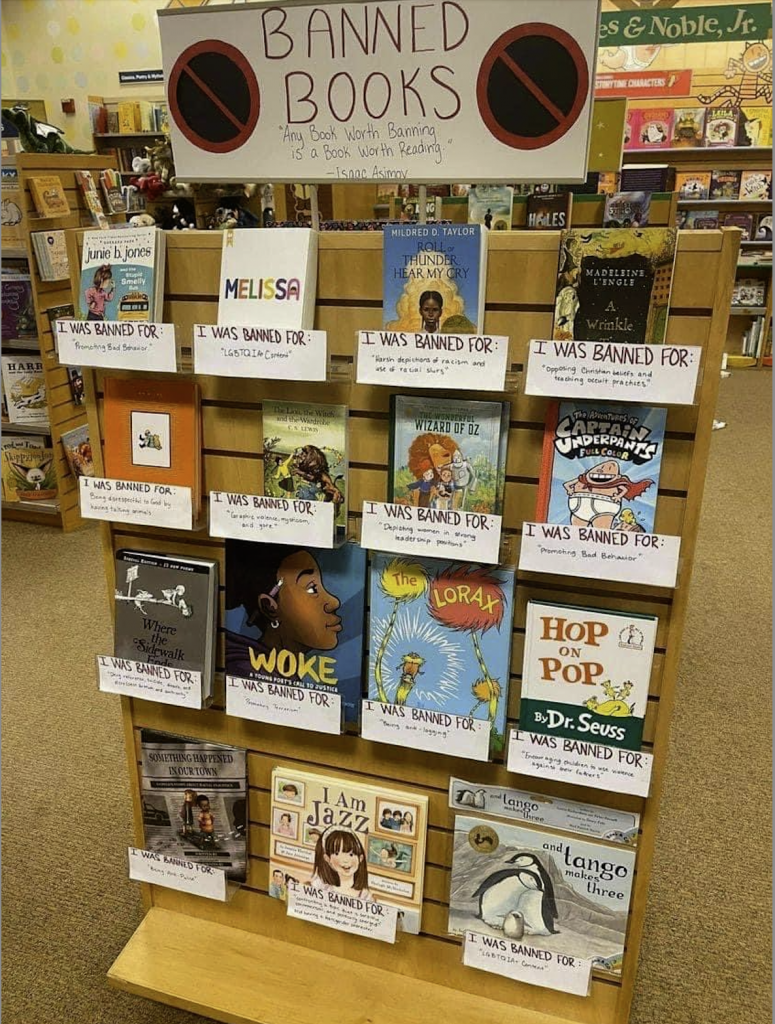
We can still take heart that we’re not as crazy as the Americans, but it’s not for want of trying. Last week’s bizarre story that the Cumberland City Council in Western Sydney, had banned all books on same-sex parenting from eight public libraries, was met with scorn and incredulity. The ban was narrowly passed: six for, five against, while four councillors were absent. Given the torrent of negative publicity it has generated, one assumes this measure won’t last long.
It all began with a complaint by a concerned parent about a book called Same-Sex Parents by Holly Duhig, who must be enjoying all the free publicity. Councillor, Steve Christou, leading the charge, argued that “our kids shouldn’t be sexualised” by this slender volume.
One wonders how many children in Parramatta are eagerly searching out books on same sex parenting for illicit sexual thrills. It seems Mr. Christou has never noticed that “parents” of any persuasion are of zero interest to teens except as a source of ready cash. I find it hard to imagine them passing around a copy of Same-Sex Parents behind the boys’ toilets.
The response to this act of bigotry have been predictably hysterical. There have been nine stories on the ABC website so far. Isn’t this overkill? The Council’s decision should have been met with the dismissive wave it deserves, not taken as the wick that ignites a mini-culture war. By this stage, the responses vastly outnumber the Council’s statements. Even now I’m adding to the tally.
What’s most noteworthy about this affair is not that the Cumberland City Council may have a few homophobes on board, ready to ban a book they haven’t even read, it’s that they believe they have the right to ban any book in a public library. Banning books is only a short step away from burning books. It’s an act of extreme intolerance that seeks to close down an opposing point-of-view rather than engage with it. It’s the right-wing answer to that left-wing “cancel culture” which entertains the same totalitarian attitudes.
In the United States, this has reached such ludicrous proportions that the Orlando Sentinel recently compiled a list of 673 books removed from library shelves in Orange County, Florida, alone, after complaints from members of the public. The list includes predictable titles such as Gender Queer by Maia Kobabe, but also such subversive material as Paradise Lost by John Milton (the Devil has all the best lines); Catch-22 by Joseph Heller (too humorous for comfort?); Swann’s Way by Marcel Proust (queer, foreign goings-on); Jude the Obscure by Thomas Hardy (Jude the gender-fluid?); The Prime of Miss Jean Brodie by Muriel Spark (obviously some deviant teenager); and Brave New World by Aldous Huxley (a bit too close to Orange County, FLA).
Add to the list anything by Nobel Prize winner, Toni Morrison, who seems to drive God-fearing white folks wild in Florida.
It sounds absurd until we realise the PC brigade have banned, or tried to ban, Huckleberry Finn, Uncle Tom’s Cabin (both use the dreaded ‘n’ word); Dr. Seuss (a hotbed of racial stereotypes!); and – ironically – Fahrenheit 451 (a novel about book burning).
No matter how hard Australia’s Councillors worked, they could never equal such a haul. What’s most disturbing is the very fact they tried to ban a book, because it shows an ugly copycat approach to the United States, making books the scapegoat of political or ideological convictions not shared by the wider community.
This is paternalistic, and authoritarian in its implications. Such people should never be handed the levers of power, as they are merely accelerating the unravelling of democracy that is happening all over the world today.
Nobody is ever obliged to read a book in the library. It’s a choice, and choice is of the essence of a free society. While there’s case for not stocking books that peddle hate speech, it’s hard to argue that a book on parenting is going to rock the foundations of the community.
This saga seems even more pathetic because it comes along at a time when young people are getting almost all their information and reading matter on-line. When university lecturers complain they can’t get their students to read a book – a request considered as some kind of cruel and unusual demand on students’ time – we should be pleased that any book is finding an audience among the teen demographic. I’m not convinced, however, that Same-Sex Parents is going to take this generation by storm.
The art column this week looks at Nicholas Mangan’s show at the Museum of Contemporary Art, for which I’ve got mixed feelings. Among contemporary Australian artists, Mangan is a more solid, thoughtful proposition that any number who simply attach themselves to some social or political issue and declare how ‘subversive’ they are. Mangan does nothing like this, researching every topic with scrupulous care, until he arrives at a plan for a visual presentation. I just wish could get more excited about the way these projects are realised, as they are intellectually engaging but aesthetically very drab. It’s one of those shows that may be appreciated, if not really enjoyed.
Another double bill at the movies, featuring reviews of two completely incompatible fims: Kore’eda’s Monster, a mystery-drama about a schoolboy who starts acting strangely, and Kingdom of the Planet of the Apes, the latest installment in one of Hollywood’s longest-running franchises. As you may remember the premiss of the story is that humans created and unleashed a virus, managing to virtually wipe themselves out, while apes became much more intelligent. Banning books might be a slower method of debraining the human race, but the eventual impact should be roughly the same.