




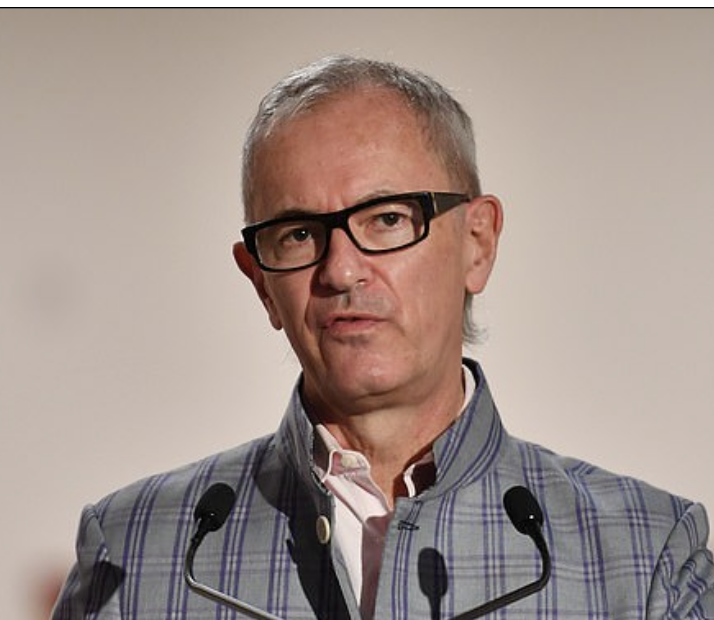
I admit to a touch of Schadenfreude this week, reading the hit jobs published in the Murdoch press on Michael Brand, the Director of the Art Gallery of NSW. Someone who is not a fan of the director seems to have passed on his government credit card statements to the tabloids, who have snapped at this red meat like savage hounds. Readers were encouraged to be outraged by a fat cat on a salary of $450,000, who regularly spends in excess of $1,000 at top restaurants, runs up bills over $700 at bottle shops, and has even paid for furniture and clothing with his tax-payer funded card.
Anybody who knows the corporate world will think these sums are ridiculously small. The problem arises when one considers this is public, not private money. The second problem is that this is being broadcast to a largely working class audience who could never in their wildest dreams consider spending $1,000 in a restaurant. The story has been all over the Murdoch papers – in Sydney, Melbourne, Brisbane, Adelaide, Hobart, Townsville, and probably many more places. It was written up in the Daily Mail, and picked up by Ben Fordham on 2GB. Bottom line: it’s a very bad look.
The AGNSW has responded to the criticisms by saying that Michael Brand’s expenses have been incurred as a normal part of the fund-raising activities that have accumulated $109 million for the Sydney Modern project. What they haven’t mentioned is that this project has been going on for the best part of a decade, and that many millions have been spent in the effort to raise these funds. It also looks a bit pathetic when one considers that in April, the National Gallery of Victoria received a single donation of $100 million from transport magnate, Lindsay Fox. The NGV’s secret is not hard to fathom: success breeds success. Or: high attendances and quality shows encourage generous donations.
Michael Brand’s terrible, horrible, no good, very bad week would be less of an embarrassment if the AGNSW could point to years of brilliant success under his leadership. Instead, the gallery has been in slow motion when it comes to exhibitions, which have frequently done without catalogues or openings. Visitors to the AGNSW have regularly found rooms closed, or shows extended for months and months. If it wasn’t for the annual money-spinner of the Archibald Prize, the institution would be in a financial predicament. Meanwhile, staff have been herded into open plan offices – a piece of discredited management-think guaranteed to diminish the standard of work, while the executive élite have their private offices.
The Trustees have been complicit in all this lazy, wasteful stuff, happy to take the free trips to Japan, but unwilling to confront the manifest inefficiencies and shortcomings of the administration.
The state government too, has created a fertile environment for running up ‘hospitality’ expenses, by expecting the AGNSW to raise such a large amount of funds privately. This is virtually an invitation to wine and dine mates and prospective sponsors on the public purse. It’s high time governments rethought their eagerness to palm off arts funding to the private sector, and accept that culture is not a privilege or a luxury but an essential service. Michael Brand may be a target for the tabloids, but he is merely a symptom of a wider malaise. The rush of bad press won’t make much difference in the long term, but it should stay in the back of everyone’s mind when we are bombarded with hype about Sydney Modern as it approaches an opening date in December. The new extension will double the gallery’s running costs. Will it need to raise these funds privately? Perhaps the government credit card is in for an even bigger caning.
Speaking of the AGNSW, this week the Herald is finally running my last word on the Archibald, which entails an in-depth look at ten finalists. I may groan about this perennial ordeal, but I accept that its overwhelming popularity invites a more extensive coverage. Fortunately, like Christmas, it comes but once a year.
The movie being reviewed is Terence Davies’s Benediction, a bio pic of the poet, Siegfried Sassoon, who made his name with his mordant verses about the First World War. Like so many of Davies’s protagonists, including himself, Sassoon was a tortured homosexual, but it was the war rather than his sexuality that seems to have caused most of his troubles. This is almost heartening in a world in which people can be bored with the war in the Ukraine but obsessed with their pronouns.