




In Sydney it seems the state government can never be done with schemes that are supposed to create brilliant new opportunities for our cultural institutions. It’s a shame that everyone who actually knows something about these institutions always seems to think such ideas are disastrous. The obvious example is the ongoing vandalisation of the Powerhouse Museum, which still remains shrouded in mystery. After trying to close down the museum’s Ultimo headquarters the government is now aiming to redevelop it at a cost of some $500 million.
Along with the vague idea of turning the place into a “fashion and design hub”, which it is already, there is every indication the big push will be for a more nakedly commercial agenda. This doesn’t augur well for scholarship, curatorship, or the proper management and care for the collection. Expect more fashion intitiatives, and more collaboration with private enterprise. I’ve yet to see any evidence that what’s happening in Parramatta could be called a museum rather than a venue, and it could be that Ultimo is heading the same way.
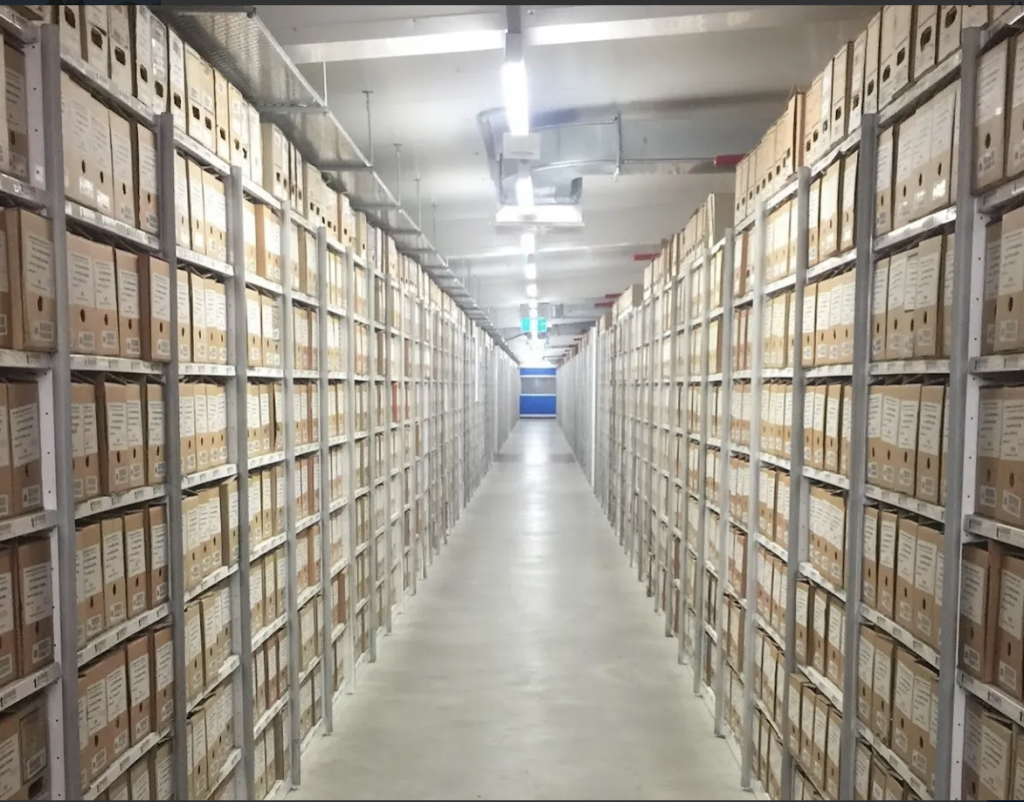
While all this is chugging along on the road to perdition, we now have another genius scheme to bring 12 museums and the State Archives under the one administrative umbrella. This is not a new development – for years, both Coalition and Labor governments have flirted with the idea of combining all Sydney’s cultural institutions into one body – presumably for administrative ease and cost-savings. It’s a plan that has been vehemently opposed by the sector, which fears the deadening impact of such potentially hierarchical control.
Now the idea of splitting the Archives between the historical collection and record-keeping has horrified the experts, from Clive Lucas and Shirley Fitzgerald to Peter Watts and Kylie Winkworth. The problem seems to be that someone has had a bright idea that the historical part of the Archives can be monetised in some way. It sounds bizarre, and seems to forget the entire function of an archive which is as much to do with the ongoing functions of government as it is with the past. By separating past from present, the government risks creating a body that is far less stringent about the information it collects and more subject to political pressures – or to give it a blunter name, corruption.
Peter Watts and his colleagues have called the scheme “a recipe for chaos” – a description that woud fit most of this government’s big initiatives. The basic problem is that it’s yet another attempt to ‘fix’ something that is working well. There was no need to undermine the Powerhouse at a cost of billions, and equally no reason to split the Archives and diminish the independence of Sydney’s museums. These schemes are unnecessary and ultimately pernicious. It would have been much simpler – and probably less expensive in the long run – to simply fund these institutions adequately and promote them properly. Why is it the powers-that-be can’t learn this simple lesson and stop imposing their will on an already battered museum sector?
I’ve hesitated to post the newsletter again this weekend, because I’ve been in Canberra, waiting to see what the newspaper actually runs. The Vivienne Binns piece went up on line this week, and has finally made it into print this weekend. The paper also has a piece on the Portia Geach Memorial Award and the Cressida Campbell exhibition at the National Gallery of Australia (written at blinding speed, by special request, I might add). The original plan was to run the Campbell piece straight away, but it seems that plan has faltered.
I’ve finally posted pieces of Steve Lopes’s survey at the S.H.Ervin in April, and the Queer exhibition at the National Gallery of Victoria in June, that Spectrum unaccountably allowed to gather dust on the shelf until both shows were over. You can find them if you scroll back through the SMH Column section of the website. I’m tempted to do the same with another couple of pieces that have been waiting far too long, as this business of holding columns is deeply frustrating for everyone.
One thing I can post with certainty is the film review, which looks at Goran Stolevski’s debut feature, You Won’t Be Alone, a superior horror movie set in old Macedonia. As ever, a movie about witchcraft with great lashings of gore will not be to every reader’s taste, but if you can endure a little blood there’s a lot to be said for this film. By any standard of comparison it’s much less of a horror show that the NSW government’s treatment of cultural institutions.