




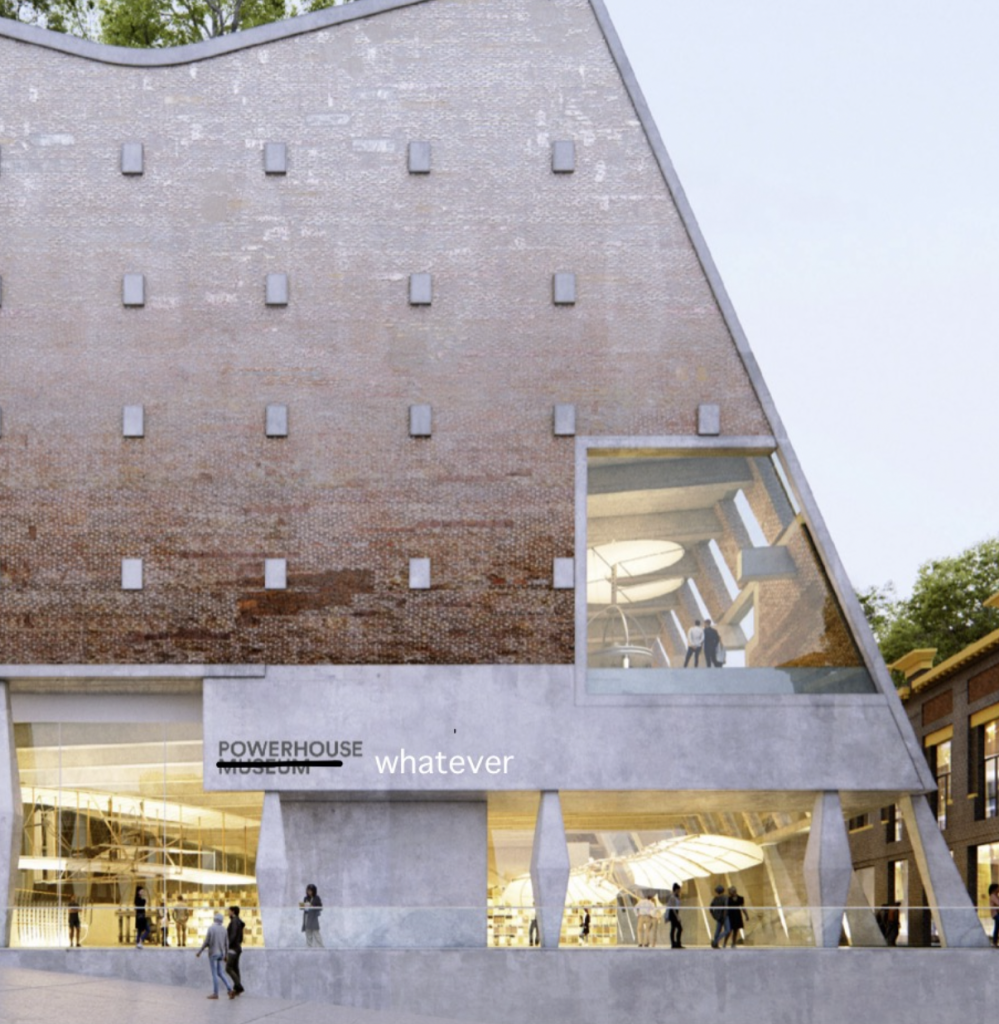
“What’s in a name?” asked the typically inane headline the Herald gave to Linda Morris’s most recent article about the Powerhouse Museum. I’m sure most people forget this plodding cliché is Shakespearean in its origins.
“What’s in a name? That which we call a rose by any other name would smell just as sweet,” ponders Juliet, while regretting that her love objet, Romeo, belongs to the hated Montague clan.
Much as I appreciate the wisdom of the Bard, I have to take issue with Juliet on this one. I’m more in line with the American philosopher, Suzanne K, Langer, who wrote: “Names are the essence of language; for the name is what abstracts the conception of the horse from the horse itself, and lets the mere idea recur at the speaking of the name.”
In other words, names are extremely important in how we conceive of anything in this world, whether we’re speaking of an animal, an object or an institution. Naturally, words change their connotations over time. The Victorians had quite a different conception of what it meant to describe someone as “gay”.
In the Powerhouse no longer calling itself a museum, there are inevitable implications. We have a certain conception of a museum as a place where items of material culture are displayed in a manner that affords us insights into the history and identity of a people or place. Take the word away, and you have a venue without boundaries or fixed expectations. It may sound like a progressive move, but when one removes the guardrails, institutions have a habit of plunging off the cliff.
Instead of the Powerhouse Museum, we will now have Powerhouse Ultimo, Powerhouse Parramatta and Powerhouse Castle Hill. This is ironic, given that the state government’s first plan was move everything to Parramatta and sell off the original site built around a disused power station. Now that site is going to be redeveloped as a “fashion hub” with considerably less exhibition space. Parramatta gets a new venue that sounds as if it will be anything but a museum, and Castle Hill is transformed into both storage and exhibition space.
One can only suspect that the new branding, achieved at a cost of $1.5 million (!), will help accustom the public to the idea that ‘Powerhouse’ now represents a brand rather than a specific building, with three outlets that may be used for any purpose whatsoever. This opens the door to commercial exploitation of those outlets and reduces the pressure to develop and host original exhibitions. Following in the footsteps of Sydney Modern, we may expect another major effort to turn a cultural institution into a party venue for hire.
Sydney Modern also hired design consultants at great expense to come up with brilliant ideas such as a logo that consists of a small set of half squares set around the words: Art/Gallery/NSW. Expect something similar from “Powerhouse”. It’s ridiculous for the former museum’s bosses to compare “Powerhouse” to the Metropolitan Museum being called “The Met”, or the Victoria and Albert Museum being known as the “V & A”. These are diminutives, not rebrandings.
Dropping the word “museum” is very similar to dropping the word “curator” in favour of “manager”. A curator, as the origins of the word suggest, is someone who cares for a collection. “Manager” has a more prosaic, business-like connotation. A curator might be expected to have a feel for the collection that a manager does not. It’s all part of the ongoing effort to treat museums and galleries as if they were any other form of business. This leads to millions spent on branding exercises, excessive use of consultants, staff corralled into open plan offices, and so on.
This week’s review looks at a show by British sculptor, Laurence Edwards, at the Orange Regional Gallery. It’s a very impressive body of work, and a big deal for a regional gallery, which rarely gets the chance to work with an international artist. It’s the latest in an amazing run of exhibitions that Orange has hosted over the past year, including mid-career surveys by a wide range of Australian artists. If Orange can do it, why can’t the major galleries be more active in this area? In this regard I couldn’t help drawing an invidious comparison with the National Gallery of Australia, although I admit that’s rather an easy mark.
The film column discusses Women Talking, which has just been nominated for Best Picture at this years Oscars. It would be an unlikely winner, but it’s a pleasure to find a movie that relies so heavily on dialogue and discussion. Whether it’s the cinema, or the name of a big institution, one shouldn’t underestimate the power of words.