




I’m on a plane to the United States, and like all weeks leading up to a trip, it’s been mayhem. If this one has been especially testing it’s because I’ve been trying to finish a monograph on George Haynes, an artist of huge importance in Western Australia who has been alternately noticed and ignored in the eastern states ever since the late 1960s. It’s to be hoped a new publication will get people thinking about George once again, as he has long been one of the most original artists in this country.
To make matters even more hectic it was Archibald Prize week, with the usual round of engagements and articles. I wasn’t going to make a prediction this year, as my first impressions were by no means decisive. But as I wrote my Archibald piece, a week in advance of the decision, I decided to have a punt, and got it completely wrong.
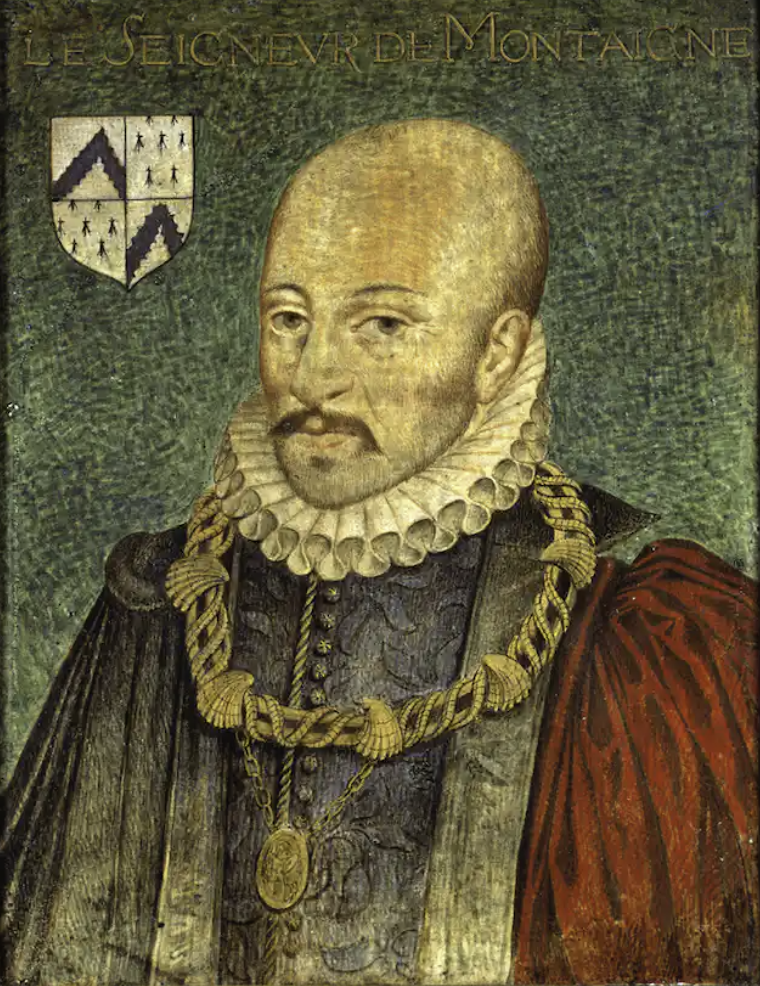
Of course, “getting it wrong” doesn’t necessarily mean I chose an inferior picture, merely that I misjudged the psychology of the trustees. Every year, one has to guess what they’re looking for in a winner, and this time it seems they were after something young and cool. The eventual winner, Julia Gutman, wouldn’t have been in my top ten. Her portrait of singer, Montaigne, felt too gimmicky, being an embroidered image made from discarded scraps of clothing on a simplistic, painted backdrop. The fact that the pose was borrowed from Egon Schiele was a further disincentive.
Nevertheless, this is what the trustees selected, which may serve as confirmation that art prizes shouldn’t be judged by a committee, or simply that I’m wildly out-of-touch with the Zeitgeist. If the latter, I’m not unhappy about it. The coverage of the Archibald is getting more banal and repetitive every year: the same kind of previews, the same lists of dumb statistics handed out to the press and dutifully reproduced.
Does it matter that there were 30 women selected this year, and only 27 men? It should be a complete irrelevance, but demonstrating “inclusiveness” is now more important than discerning quality. Even if the trustees arrived at these percentages by accident, which is entirely possible, it’s a depressing business that it has become the major claim to fame in this year’s press releases. Such an emphasis also made it a virtual certainty that no male artist would win the 2023 prize.
Undoubtedly the silliest attempt to find another statistic was AGNSW director, Michael Brand, telling us that because there have been two occasions on which the prize was not awarded, this year, rather than 2021, was actually the 100thanniversary of the Archibald. Not even the most desperate reporter fell for that one.
Then there was the obligatory boast about Sydney Modern, which has supposedly attracted a million visitors since it opened in December. That’s roughly 200,000 in five months, or 6,600 visitors a day. These are the kind of figures a major new art museum in Sydney should be attracting, but I still find them a little rubbery. Perhaps if one adds in all the galah fundraising events and school groups, it’s possible, but I’ve been in the new building on days when the numbers would never get anywhere near 6,000. I must have been there on the wrong days.
Until the end of the year, when we’ll be seeing Kandinsky and Louise Bourgeois, the Archibald, Wynne and Sulman are almost the only actual exhibitions the AGNSW is hosting. The works in The National will be shown until 23 July – which is also the closing date for the Archibald spin-off, the Salon des Refusés. The Archibald, however, runs until 5 September, occupying a full third of the gallery’s exhibition calendar.
At least it’s not simply a part of the permanent collection listed as an exhibition on the AGNSW website. I know I sound like a broken record, but this is really not good enough. It’s plain lazy, and the citizens of Sydney have a right to demand a bigger effort from its major cultural institution. With the MCA in similar slow motion this year, it’s slim pickings for a weekly column.
Criticism is a dying trade in an age when both museums and media believe one must be “supportive” of everything that is dished up, and of those who are doing the dishing. This not only boring and saccharine, it’s a complete betrayal of what criticism – and journalism in general – should be doing. With the Archibald there is a huge effort to drum up excitement for what is, invariably, a mediocre collection of pictures. So long as the Archibald is treated as Australia’s standard of artistic excellence, significant cultural activities will always be viewed as marginal and elitist.
Let us have the sideshows by all means, but take them for what they are. Culture should be a powerful stimulant for thought and feeling, not just a giggle. The Archibald, alas, is a giggle that has taken on the status of a monument.
The film column takes us to the opposite end of the cultural spectrum, with Rolf De Heer’s The Survival of Kindness – a bleak allegory in which all the characters speak an incomprehensible tongue. It’s not a movie that sets out to please audiences, but to make them think – even if their first thought is that they’d sooner be watching a different movie. There’s something so extreme and yet so sincere about De Heer’s approach to filmmaking that I can’t be dismissive. If Archibald frivolity makes you feel ill, here’s the antidote.