




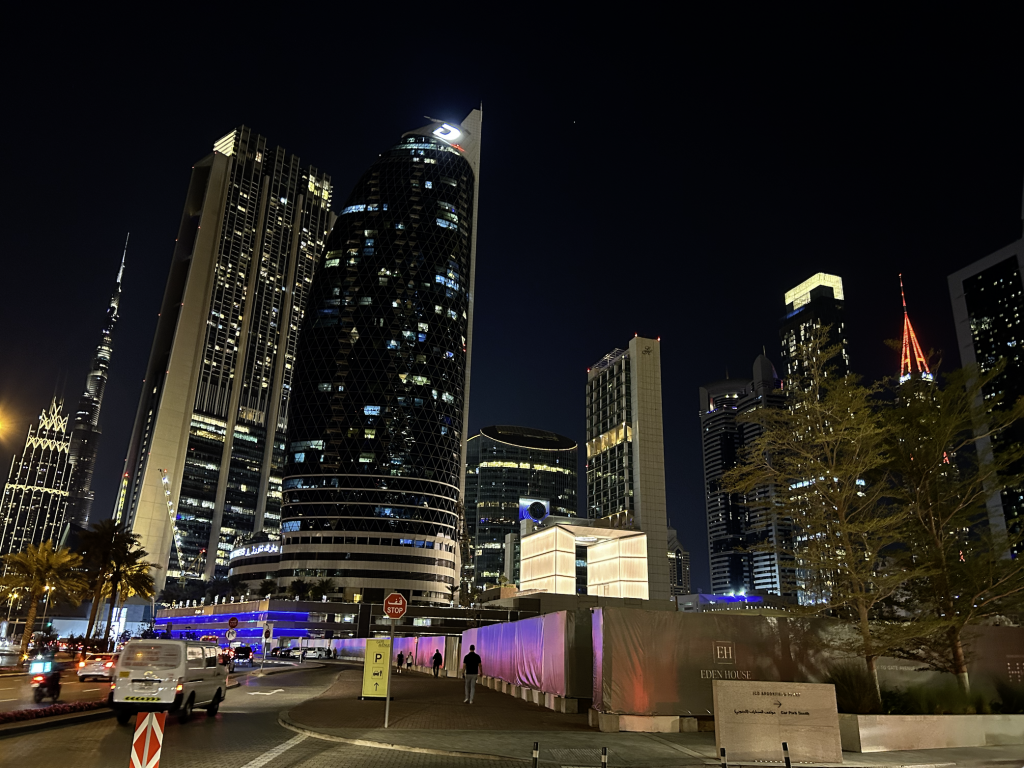
This is another one of those weeks when I’m travelling and have no time for long fulminations – which may be a relief for some readers. I’m in Riyadh, having just arrived from the UAE, where the latest edition of Art Dubai is underway. I don’t know if there is any way of measuring whether the Middle East is developing faster than China nowadays, but the pace of change is relentless. What a contrast to the United States, where everything feels as if it’s decaying. New York is looking increasingly shabby while Riyadh is transforming itself into a cosmopolis.
I know there’s a small matter of human rights involved, but there’s also real progress being made in the quality of life for Saudi citizens. It’s the same trade-off we see in China, where an authoritarian government is broadly tolerated because of a tangible improvement in the way people live, with consumer advantages and small personal freedoms compensating for broad political ones.
The moral of the story may be that people are happier to attend to the basic details of daily life rather than grapple with momentous, abstract ideas of citizenship and governance. Yes, I know, it sounds a bit like Scott Morrison’s “quiet Australians”. As a trend it paints an ominous picture for a world in which democracies are becoming increasingly unstable, eating themselves up with irreconcilable divisions and faddish obsessions.
The art column this week looks at the way China has responded to three decades of rapid urbanisation, in A Blueprint for Ruins at the White Rabbit Gallery. It’s a tale filled with contradictions, with most of the artists in the show adopting a critical, rather melancholy viewpoint on the process. A disadvantage of living under an authoritarian regime is that one has to be careful not to offend the powers-that-be by being overly critical, or by simply telling the truth. This leads to an array of oblique ways of apparently saying one thing while actually saying another. It generates a level of creativity that far surpasses the dreary political sloganeering which characterises so much contemporary western art – made by artists who know such gestures will only enhance their reputations and career prospects.
Nevertheless, there are probably very few artists who wouldn’t prefer to grapple with the creative complacency of a democratic society rather than continually demonstrate their inventiveness in a totalitarian state.
Speaking of totalitarian states, this week’s film review looks at the Iranian movie, Subtraction, which has the familiar gritty realism one associates with this country but used to very different ends. Mani Haghighi has made a mystery about a couple who meet their doppelgängers in Tehran, and the drastic consequences that ensue. It’s the Middle Eastern movie Hitchcock never made.