




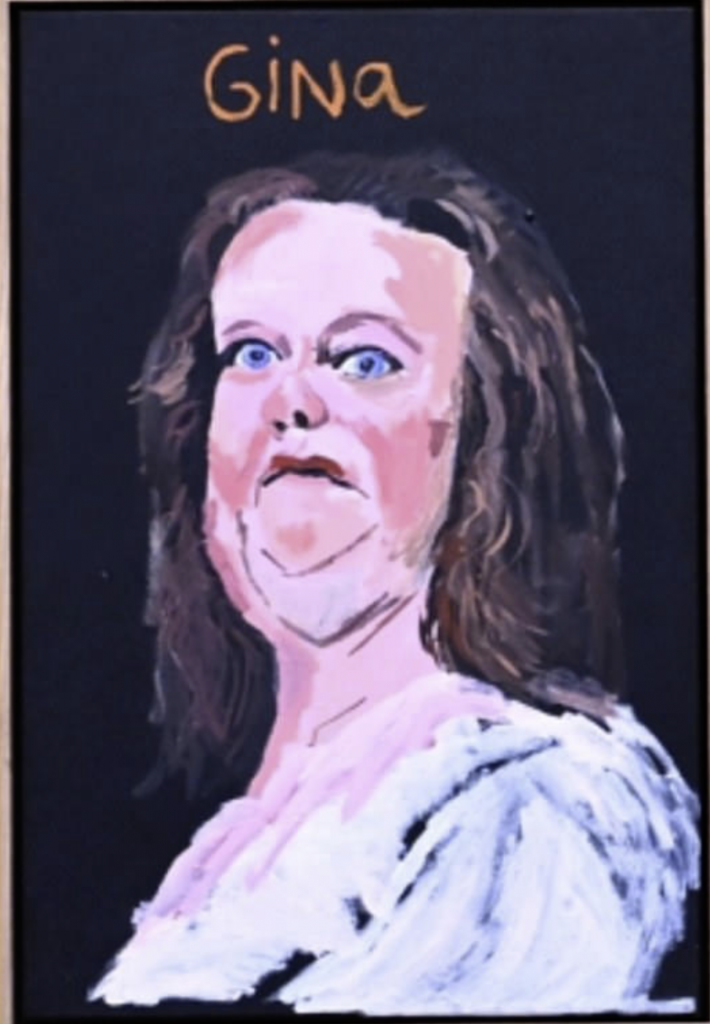
It’s impossible to avoid the most pathetic art story of the week, Gina Rinehart’s request/demand that the National Gallery of Australia take down a portrait painted by Vincent Namatjira, currently being exhibited in a survey exhibition. Ms. Rinehart could not do anything but score an own goal with this bit of peevishness, because it’s an irresistible story for the media. Rightly or wrongly, it makes her seem vain, humourless, and high-handed.
She has gifted the NGA a publicity coup because her personal intervention is sure to attract visitors to the show who would never have otherwise made the effort. This will stand as her most valuable financial contribution to the NGA coffers, as journos have been quick to report that her sole donation to the gallery is somewhere between $5,000 – $10,000 – a pretty poor effort for the richest person in Australia. With an estimated value of $30 billion, Rinehart is wealthy enough to revolutionise the arts industry in Australia at the stroke of a pen, but it’s not on her to-do list. The NGA is in no danger of offending a generous donor by not doing her bidding.
The newspaper stories have repeatedly described the picture as “unflattering”, but it is merely one in a block of 21 portraits of the same size, and no more unflattering than any of its companion pieces. Vincent is no flatterer, and no master craftsman. He takes a rough & ready approach to portraiture, working from published photos, being content with a recognisable likeness, no matter how distorted the details.
Most importantly, he is a satirist, who wants to make us laugh. He goes about this in a particularly gentle manner, often being content with putting himself into scene with the Royal Family, or other famous and powerful figures, as if they were perfect equals and the best of friends. Alongside some of the so-called satire one finds in the mainstream media, Vincent is a pussycat. Compare his pictures to say, Johannes Leak’s cartoons in The Australian, and the latter come across as not funny, but downright nasty and one-eyed. Vincent’s satire doesn’t set out to insult and degrade anyone. It works by treating everyone as equals in this great democracy of ours, even though we all know some are more equal than others. If Gina Rinehart has an opinion on how the mining industry should be taxed or regulated, the politicians will be paying closer attention than they would be to any views you or I might extoll.
In this he is much closer to the mark than those bigots who attack only one side of politics. One need not be a longterm observer of Australian political life to see that the Coalition and the Labor Party have a lot more in common than those things that divide them. The Minns Government’s appalling betrayal of the Powerhouse Museum is but the most prominent example of the way tiny minds think alike, even though they may be found on opposite sides of house.
In the work Ms. Rinehart finds so offensive, Australia in Colour (2021), she is included with a motley collection of other subjects, both black and white, from Captain Cook and Ned Kelly to Jimi Hendrix and Adam Goodes. Among the living are Cathy Freeman, Angus Young, Julia Gillard and Scott Morrison, none of whom have complained about their equally ropey portrayals.
It seems that all the money in the world won’t buy you a sense of humour.
The art column this week is blissfully free from politics, focussing on a 50-year survey of work by Sally Robinson, who made her reputation at a printmaker in the 1970s & 80s, and has shown herself to be an accomplished painter over the past two decades, producing both portraits and abstractions. This show is long overdue and provides yet another example of the SH. Ervin doing a job the AGNSW has long ignored – namely holding retrospectives for significant local artists.
At the last minute I’ve been informed that this column is being held over because the newspaper has a big ad that has to squeezed in, and it seems the art column has been judged the most expendable item. As holding a column back plays havoc with these postings I’m putting it up, as if it were published.
The movie being reviewed is The Taste of Things, a gastronomic extravaganza by Anh Hung Tran, about a famous gourmet and the love of his life. It’s probably the most sumptuous film you’ll see this year. After a French meal it’s not unusual to feel one has had too much of a good thing, but viewers will leave this movie feeling perfectly replete.